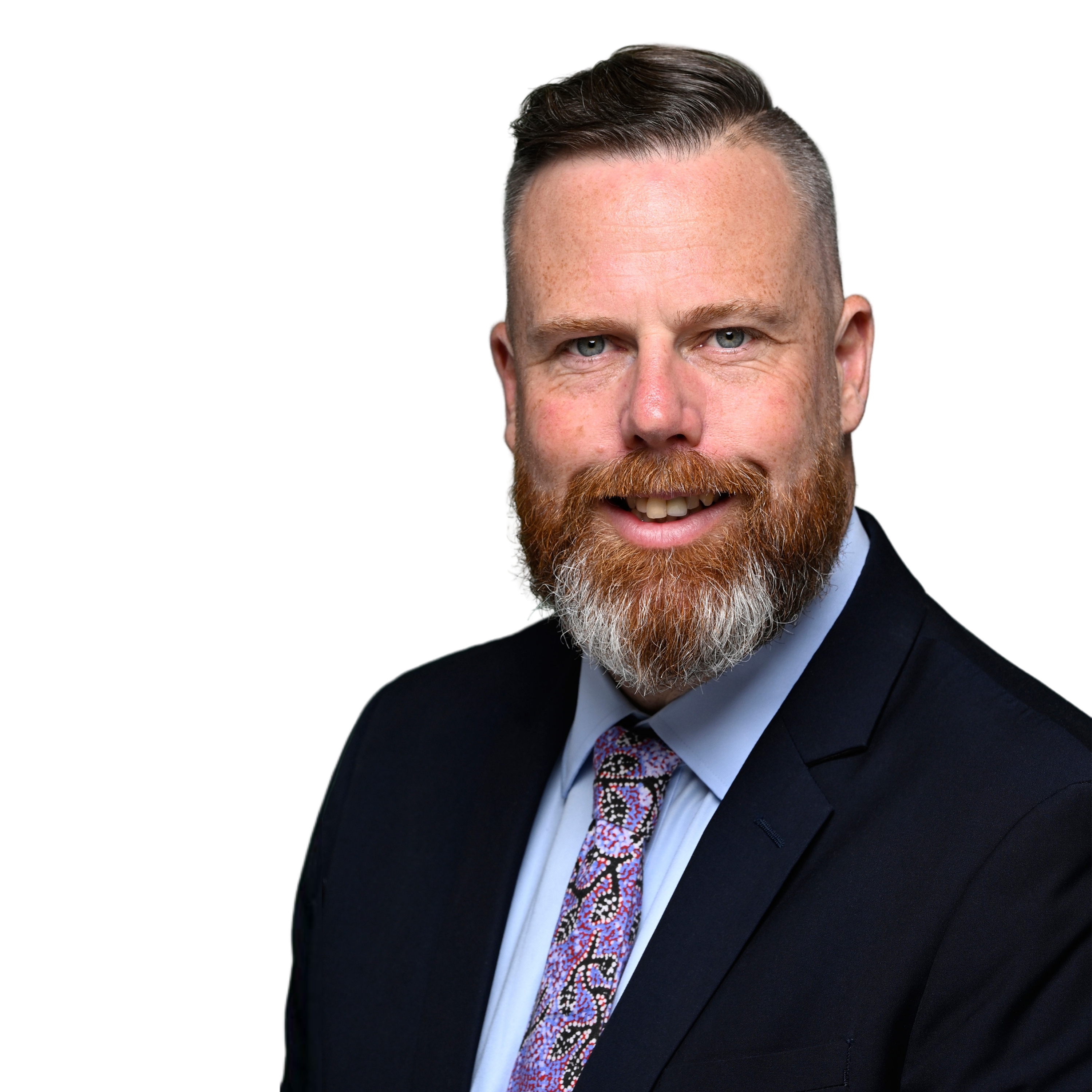
Dan Repacholi MP - Special Envoy for Men's Health


 Spotify
 Apple Podcasts
 Overcast
 PocketCasts
 RSS Feed
 Adam (0:00): Dan, thanks so much for coming on the Milk Road Podcast. It was great to meet you in, Boerne at, the Business Northwest when you talked about men's health and your role as, envoy. Can you, can you tell us a little bit about that and how your experience was and and what inspired you to even start?
Dan (0:18): Thanks, Adam. It was good to, good to meet you at Boerne. It was, good having a chat to all of you all of you people there. It was a a nice place, Tassie, and it was good for us to get out and not just be in the cities to actually get out to rural rural and regional parts of every state and territory around the country as well. So this role of Special Envoy for Men's Health is a brand new role.
Dan (0:41): This has never happened ever before in any government. So I'm extremely proud of the Albanese Labor government for seeing this as an important role. Whether it was me or somebody else, it doesn't matter. As long as somebody got this role and we can see how we need to be looking after men in a very different way. So that's the whole goal is to make sure that we can have men live longer, be around for a lot longer for their families and friends and the community.
Dan (1:08): Because unfortunately, the statistics out there are quite alarming for men. Men pass away unfortunately on average just under five years younger than our female counterparts in the cities. And then in rural and regional Australia it's even worse. It's up to thirteen years younger many, many times so that this happens. And if you're Aboriginal Torres Strait Islander, you top the charts in every single one of these areas for men's health.
Dan (1:38): So we really need to see these numbers turn around and that's why this role has been created. So hopefully you can see those numbers in change in time to come and we can see generational change.
Adam (1:51): That's terrific to learn about. And I had no idea, that this was happening and I felt really lucky to have learned about it, in this new role that's been created and that you're bringing it from the urban out to the rural where some of these problems statistically are actually worse, those numbers you're talking about. So that's helpful to understand. You know, I think that you coming to Boerne was part of what this role requires you to do to fulfill, and solve, you know, those problems. What else does it require you to do, if I may ask that?
Dan (2:33): So getting out there, getting all around the country, listening to all the different organizations and stakeholders that are out there, hearing what their pinch point is with government, and then also listening to the everyday men and women on the ground and hearing what their issues are. Because if they're telling us a very different story to what all the organisations and all the different groups out there are telling us, then just feeding money into those groups isn't actually helping the situation because the info is not getting down to the people on the ground. So we need to make sure we're listening to all sides of the all sides of the coin here and making sure that after we finish these eighteen months to two years of listening that we are going back to the health minister and having proper conversations about what we may be able to do in this space to genuinely make a difference to the everyday men and women on the ground. Because if we can get healthier men in the community and we've got healthier women in the community, we have healthier communities in general.
Adam (3:34): Yeah, that's my understanding as well. It sounds like part of what you're doing is what people call community consultation.
Dan (3:43): Spot on. And that is exactly what this is. We are doing community consultation first on this space because if we knew how to fix it, we would have already done it at them.
Unknown Speaker (3:51): I say that in Bernie.
Dan (3:54): Government before us would have fixed this issue and we wouldn't have these alarming statistics that we do have in this space, which are extremely scary for blokes. We would not have those alarming statistics and we would not need this role to be perfectly honest with you. So we need to listen first and see where we can make meaningful change to make generational change into the future.
Adam (4:17): Yeah, that makes a lot of sense. I see you coming to Bernie as part of that process. And also to, like, I kinda wanna say, that, I imagine it's not easy. I mean, I I came to Tassie a while back. Traveling around rural communities is one thing on the Mainland, and coming to Tassie is is something else.
Adam (4:37): So that leads kind of the next question, which is the role was, you know, the role was created as I think a good idea. And I've heard you talk also about women's mental health and women's health overall and you know, it's about kinda getting a good balance, right? Of of what it is but what inspired you perhaps maybe to put your hand up for that role, you know, to start? And then also maybe what inspires you to keep going when it's not so easy?
Dan (5:08): So for me, I've always had an interest in men's health. I haven't always looked after my own health very well, to be perfectly honest with you. And I I'm a five time Olympian, three times Commonwealth Games, Golden Bronze medalist in pistol shooting. I've had everything thrown at me to be able to look after myself and know exactly what I need to do to be at the peak of my performance, fitness and everything. But I ignored all that information.
Dan (5:34): I didn't use it. I got to one hundred and fifty two kilos and was absolutely massive. I'm six foot eight, so I'm big unit to start with.
Unknown Speaker (5:42): Then You are tall, right?
Dan (5:45): I'm a big guy, yes. So I had to do something about that. I've got two beautiful daughters and a beautiful wife and I need to make sure I'm around for them for a lot longer. So did something about my weight and I started my weight loss journey and I'm down now 35 kilos from that. And I'm very open about my story on this.
Dan (6:05): Very, very open about it because if I can't talk about it, how can we expect somebody else to be talking about this down the street in Cessnock in the main road of Boerne? Like how can we expect somebody to be able to go and say to their mates, well, you should have a good look at this and actually look after your health a little bit. And I was very open about that in that journey. And we need to make sure that we are having conversation because if I can't do it, then how do we expect others to?
Adam (6:33): Agreed. Yeah, that reminds me of something I was thinking about coming into this podcast. Like I was born in '63. So my generation when we were growing up, like mental health was like, don't mention mental health, right? And I'm from Western Pennsylvania, which is cold country as well.
Adam (6:49): Yeah. And, you know, it's kind of like that skit where it's like, don't mention the war, right? Like, don't talk about the problem, just keep it covered up. And I think that really hits with what you had said that one of your speeches was like a healthy workforce, not just about physical safety, it's about psychological well-being. And you also said for men in particular, one of the biggest challenges we still face is a culture of silence around mental health.
Adam (7:20): And men are still reluctant to speak about that when they're struggling. So you leading that and doing it first seems pretty valuable.
Dan (7:29): That's it. And I agree. And as I said, if we can't talk about it, we can't expect others to do it. And so that is one of the major major issues in work in workplaces all around the country is that men aren't talking up, especially in male dominated workforces. Men aren't talking up about their issues.
Dan (7:48): And productivity, like we all talk about productivity and that we want to see better productivity from so many different areas. This plays a massive part in productivity. If we can get more men out there chatting, more men talking about their issues, it's taking worry away from them. A burden shared with others is a burden halved.
Adam (8:09): Agreed. If I can just jump in there, like the drum I'm beating where I live, like I'm a business person. Right? And, you know, it's about finding business problems and solving them. Right?
Adam (8:23): So, like, if you don't know what the problem is, you cover it up or don't talk about it. You're not solving it. So I think in a way, this is kind of a socioeconomic unsolved problem that you're shrinking. Does that what do you think about that perspective?
Unknown Speaker (8:38): Yeah. That's certainly correct. Certainly correct. And you can have as many team barbecues as you like to build to build a team and build culture and things like that. Yeah.
Dan (8:46): But if you've got people in there that aren't willing to speak and talk about their issues that they may be having, then it doesn't matter all the other cultural things you do because they're tied up, their minds elsewhere. It's on other things that they're trying to deal with their own demons. So if we can have some of those people just have these conversations to look after themselves, it will make an amazing amount of difference all throughout the community, the sporting community, through the workplace, through just everyday walking down the street. Like, it it'll be amazing what I could do.
Adam (9:20): Agreed. I mean, I guess where I'd just kinda like to dig in there just briefly was that, like, up a problem in a business, you lose money. Right? And if you kinda stretch that logic out, that's how you end up with things like Chernobyl. Like, they just they just kept covering up.
Unknown Speaker (9:38): No problem. No problem. No problem.
Unknown Speaker (9:40): And feel like a spawn.
Unknown Speaker (9:41): Yeah.
Unknown Speaker (9:42): Yeah.
Unknown Speaker (9:43): Yeah. So I really, you know, I see
Unknown Speaker (9:45): with the iron health.
Adam (9:46): Yeah. Exactly. And so that what you're doing is actually you're changing the way the culture thinks about it, and you're leading that as the envoy. And and that's, that's not an easy thing to do from what I can see. I mean, do it really well, but I think, yeah, I imagine, that it's, pretty challenging.
Adam (10:06): I think I should ask a different question before I kinda go down that rabbit hole too much. The, as a problem, right? And I maybe this question isn't so great, but if you could snap your fingers and make that problem go away, then how would you describe the problem that you're working to solve or just shrink?
Dan (10:29): So with that, it's about for me the problem is men's health obviously. And to get men's health a little bit better, it all comes down to communication with health professionals.
Unknown Speaker (10:42): Got it. Yeah. So that's Again, normal for us
Unknown Speaker (10:45): to see a GP.
Adam (10:45): Healthier men is the goal. The how is, you know, oh, getting us to go talk to health professionals. And be like, I'm struggling with this problem.
Dan (10:58): That's right. Yeah. Make it normal for us to see a health professional. If we can get 10% of Aussie blokes to see a GP every twelve months and get a blood test, we're gonna save thousands and thousands of lives. If we can just get ten percent more.
Unknown Speaker (11:10): Right. And ten percent doesn't sound like a lot, right? But it will literally save thousands of lives.
Adam (11:16): I saw numbers on one of your speeches. It was like 700 lives were saved by that process that you drove.
Dan (11:24): Yep. That's it, yeah. So it's all about education. We can educate men to see health professionals and see that they are a necessary thing and something that they can help them with to live a good healthy happy life, to be around for their family and friends and their community a lot longer, that's all great great things.
Adam (11:47): Oh yeah, I mean that's what life's all about and that's what we're all shooting for. Hey, so in terms of your work, what's been the biggest surprise that you've learned as you've been doing this? The thing that you didn't know, you're like, oh, wow, I didn't know that. Been Has anything that surprised you in this process?
Dan (12:09): The statistics. A lot of the statistics we've learned are much, much worse than I ever anticipated. And just the fact of how many men aren't actually putting their health as a priority. And as I said, I was one of those blokes. We've all been in that space.
Dan (12:27): But to really see just how many men aren't doing that, that is scary. And that's why I have been saying that 10%. If we can just get 10% more Aussie blokes to see a GP and get a blood test every twelve months, it will make a real, real difference and actually start to shift this dial so many ways. We'd love to see every bloke doing it and every and a 100% of men seeing a GP every twelve months and getting a blood test. You have to be realistic.
Dan (12:55): So if we can start off small and get that ten percent in there, that's the thing that did shock me the most is just how many men aren't looking after themselves.
Adam (13:04): Is there any one statistic and I know we're kind of talking off the cuff here. Like, was there any one specific statistic that jumped out at you? Like, you know, like, like, I don't know, one percent of men go talk to a health professional or something like that?
Dan (13:19): The one I used at the start when I first spoke about, which nearly we passed away as men in the city areas just over just over four years younger than our female counterparts and up to thirteen years younger in rural and regional Australia that could be. Like, is that is the stat that honestly hit me the most.
Unknown Speaker (13:41): Right, yeah, thirteen years does sound like a
Unknown Speaker (13:44): fair That's right, yeah. One
Adam (13:49): of the things that I ask you just before you were leaving the Business Northwest talk, and I really appreciated getting a chance to chat there briefly. And and that's why you came on the podcast because I asked you, like, how can we help? And and you said something, and I kinda missed it. What you know, like if there's somebody listening now, besides themselves taking action and actually going, I'm gonna go help myself because it's gonna help my family, right? And then perhaps helping their mate.
Adam (14:23): Do you remember what you mentioned to me briefly? Because it was pretty quick outside that doorway, yeah.
Dan (14:28): Yeah, so the biggest thing is if you're going through something, being able to talk about it to a mate. Because I guarantee you that there's people in your friendship group that are going through the same thing if not worse. That are going through and looking at these things and saying, oh this is happening to me as well but I'm not talking to anyone about it because of these reasons. I'm embarrassed or I'm concerned of what people will think. Being open about what is happening in your situation.
Dan (15:00): If you can have that, that's a good thing. And being at a workplace that is actually willing to have the conversation and send people for help if they need it. One thing that I can guarantee it would go well in workplaces and with staff is that if you need if you to go see a GP every twelve months, take a sick day to do it. Book it in, see to do it, get your blood test done, get everything lined up for that day, have a sick day to do it. Let us know, give us the heads up.
Dan (15:31): Yeah, I guarantee you if workplace has done that around the country, we would see many, many more men go to see the GP and get blood tests done.
Unknown Speaker (15:41): Right. Yeah. Make it part of the cultural behavior.
Dan (15:46): Yep. That's it. Same as mental health days. Workplaces have where you have a mental health day that you call up and have, Today's a mental health day. Like, give notice, like if you say, Yep, as long as you're booking with a GP, give us twelve months, give us four weeks notice or two weeks notice, whatever, it doesn't matter.
Dan (16:08): But it's a notice time there, bookings at a GP. If we can see workplaces doing that, that's a major cultural shift in the workplace for starters. And that'll get more more people to see the GPs.
Adam (16:21): Yeah, that makes sense. Hey, do you mind if we talk about the speech, your maiden speech in parliament? I found that really valuable to listen to. It was really great. And, you know, you're a sports person.
Adam (16:34): Right? Like, you still are. I think you're still competing. Right? And, you know, the perspective that something you you mentioned a lot of really valuable things there.
Adam (16:44): And you've actually worked and running a business. You, you mentioned how you worked with Rusty Russell and Double R and grew a business from 15 people to 70 people. Right? A that's a big thing to do. Right?
Adam (16:58): And create a lot of jobs, and that creates a lot of healthy situations. But the as a sports so you've worked in business. You've worked in sports. And I think maybe the perspective that, that you're helping me think about, and also I think Peter Gutwin and other sports people too would look at it that way, is that, like, we go to coaches to help us with our sports. Right?
Adam (17:26): Like, how do I do I kick the ball through the thing better? How do I shoot this thing better? Whatever it is. But when it comes to our mental health, we're much much less likely to do it. Does that
Unknown Speaker (17:38): That's right.
Adam (17:38): Think about right? So yeah. It's that there's kind of like, if we're doing it over there, why not over here?
Dan (17:46): And we should be doing it, Adam. It's exactly what we should be doing. We're seeing in sport now just how important with the physical limits of being and let's use a 100 meter sprint for instance. Their bodies are so fine tuned, the thing that is stopping them being able to hit that mark is only their head. Their head is the only thing that's stopping that.
Dan (18:21): So because they're physically perfect in every way, there's not much more they can do in that space. But here is where you can do a lot and that's the same with shooters. Shooting as well, Any shooter that shoots at the top level, they know how to shoot a perfect shot every time. It's here that stops it. That's what's between the ears and that's where sports psychologists are so, so important.
Dan (18:42): And that's no different in the normal world as well, where the business world or the your normal family world, wherever it is, it does not matter, right? Having access to somebody that you can have a conversation with and guide you through some areas, whether it's a mentor, whether it's a sports psychologist, whether it's a psychologist, whatever it is, or whether it's just your mate George down the pub who you have a beer with every three weeks and just have a chat with him. Like, it's somewhere to have an outlet to think about things a little bit differently.
Unknown Speaker (19:19): Yeah, that thinking about things a little bit differently. Like it's that idea of positioning the mental health coaching.
Unknown Speaker (19:28): Yep.
Adam (19:29): It makes a huge difference in sports. If you, as you mentioned, right, the leading athletes like Federer, the tennis guys I know, right? And Djokovic, they all, and like AFL, they all talk about how and the coaches as well, you know, it's mind first, then body.
Dan (19:50): Yep. And mindfulness is playing such a big role now in so many sports. And people are really seeing what it is doing.
Adam (19:58): In your speech as well, you talked about fairness and how important that is for people to have actually a fair go and to have a fair share in health care services and how that brings hope to communities. That I see as a big part of what you're doing is you're actually kind of leveling up some level of unfairness that exists between the city and the country, where I live in rural. Does that sound wrong?
Dan (20:30): No, it's definitely right. And no matter how we look at it, living in rural and regional Australia, it's harder. Not a single doubt in the world there, it is much harder than what it is for our city counterparts and our friends in the cities. Because I have every service at their fingertips. It is much easier for them to get in to see a doctor.
Dan (20:49): It's much easier than to get in to see a psychologist. So many different areas. It is so much easier than they get into. And for me, we need to make sure that we're doing the best for the whole country. That's why with this role, we're not just spending our time on the East Coast Of Australia.
Dan (21:04): We're going the whole way around Australia, we're going to cities, we're going to rural and regional towns as well to hear what the issues are and to see where we can make that big difference. Because this can't just be something for the major cities all around the country. This has to be something that works everywhere and that keeps everybody accountable, keeps government accountable, but also gives the best amount of care to people all over the country.
Adam (21:30): Yeah, that's my understanding. Hey, I know you've got to get going because there's just a few minutes left. What would you like to leave listeners with? And I really can't thank you enough for coming on, and it's great that you get a chance for me to learn about it and hear about it more. And, and I'd love to think we can talk again another time along the way.
Adam (21:48): But what would you like to leave, listeners with in terms of, a message that, that they might some action they might take to follow-up?
Unknown Speaker (21:58): Most certainly, Adam. I'd love to come on again as well onto the onto the show. You just organize with my team and I'll sort that out.
Unknown Speaker (22:04): Yeah. Chad was terrific. He was really great. Thanks to him. Yeah.
Unknown Speaker (22:07): That's good to hear. Yeah. The the biggest thing I'd I'd like to leave with listeners is for men, if you haven't been with a GP in twelve months, go and do it. Get a blood test, go and have that conversation with your doctor. If you've got young kids, especially young boys and young men in your life, take them to the doctor with you.
Dan (22:30): Take them, make it normal for them to see a health professional. And if we can get young men going, well, like for me, I never went to the doctor unless I had a broken bone or I was about to die. That was the only reason my mum would ever take me. And many, many other men and young boys are like that all around the country. Let's change that.
Dan (22:50): Let's take let's like what we do with our daughters and usually it's mums taking their daughters to the GP, sorry. They go and they have checkups. They do things differently because of the way females are different to us.
Unknown Speaker (23:03): True.
Dan (23:04): If we can get young men to go to the GP with their dads, especially with their dads. Every twelve months and actually make it normal for them to talk to a health professional, that's how we make generational change. That's how we make it normal for them to see a doctor and have conversations with a doctor. Or conversations with a nurse or conversations with a psychologist or conversations with a mental health professional. These are the things, if we could start to see some of these things change with younger Aussie men, that's how we make generational change.
Dan (23:37): And if we can get the dads to do that and take the young boys to the doctors with them every twelve months, that will make a massive difference in people's lives.
Adam (23:46): Oh, that's great. That message really resonates with me. And I hope people that are listening now, and I can't thank you enough for coming on and distributing that into rural Tasmania with the podcast.
Dan (23:58): Cheers, Adam. It's been a pleasure being on the show. And to everyone in rural and regional Tassie, enjoy it. Keep enjoying Newell Road and looking forward to getting down there again soon.
Unknown Speaker (24:07): Terrific. Thanks so much.
Unknown Speaker (24:09): Cheers. Thank you.